SaaS engineering for products that have paying customers(or are about to)
A demo isn’t a product. Real customers need sign-up that works, roles and permissions, billing that’s right every month, integrations, audit trails and a platform that stays up. We build and run that, in two-week releases, inside your repository.
Planned 3
In progress 2
Shipped 2
What a production SaaS needs
The parts customers never praise but always notice when they’re missing.
Accounts, roles and permissions
Organizations, invitations, roles and access rules that hold up as customers grow.
Customer and admin portals
Separate experiences for your customers, their users and your own team.
Subscription billing
Plans, trials, upgrades, invoices and failed-payment handling.
Email and notifications
Transactional emails and in-app alerts that render correctly in every language you support.
Integrations and APIs
Connections to the tools your customers use, and an API they can build on.
Audit trails
A record of who changed what and when, for support and for your customers’ compliance teams.
Cloud deployment and monitoring
Staging and production environments, backups, alerts and safe releases.
AI features, added safely
Document reading, summaries or assistants, with costs measured and people confirming results.
Two ways we work with SaaS companies
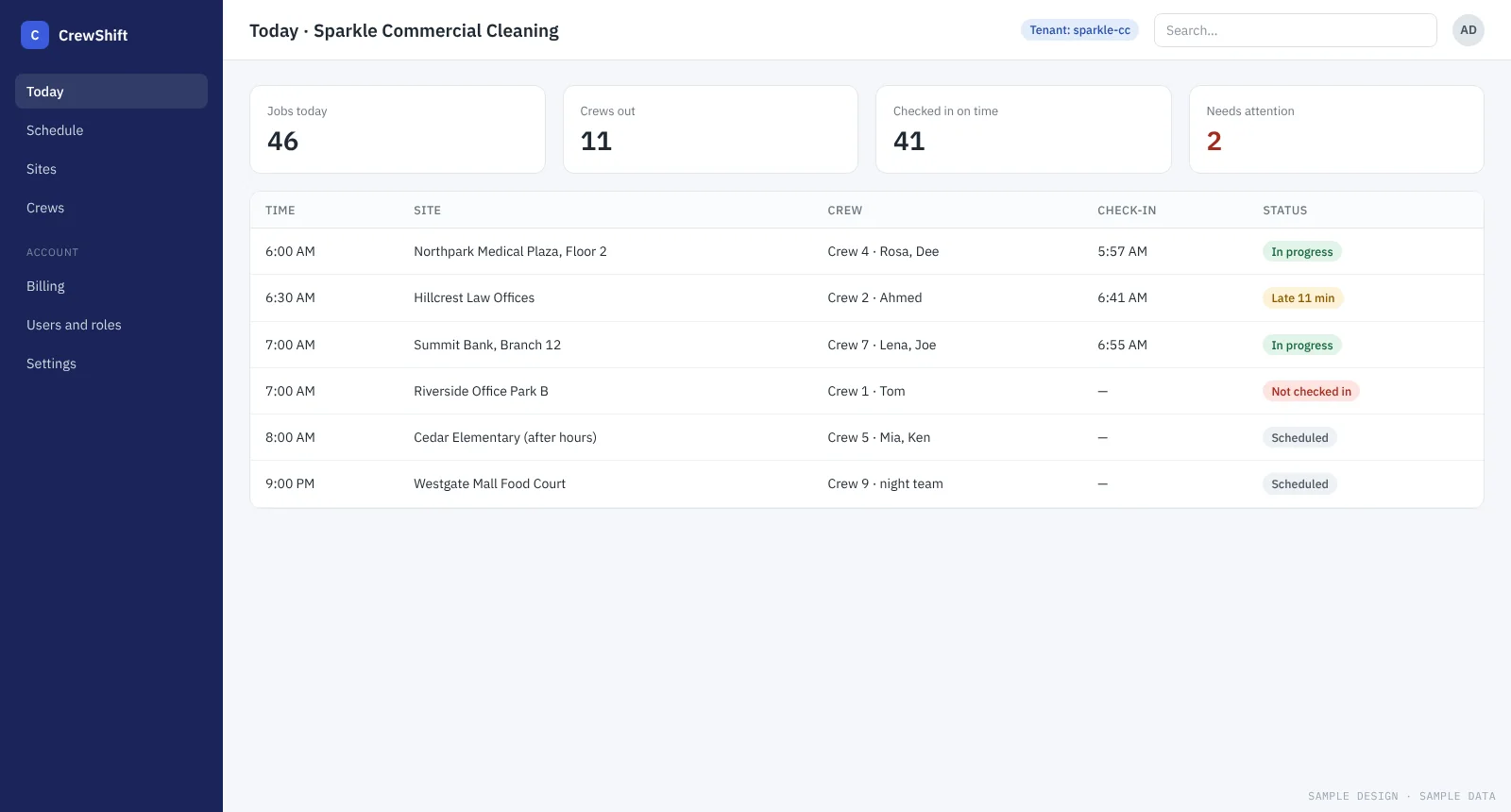
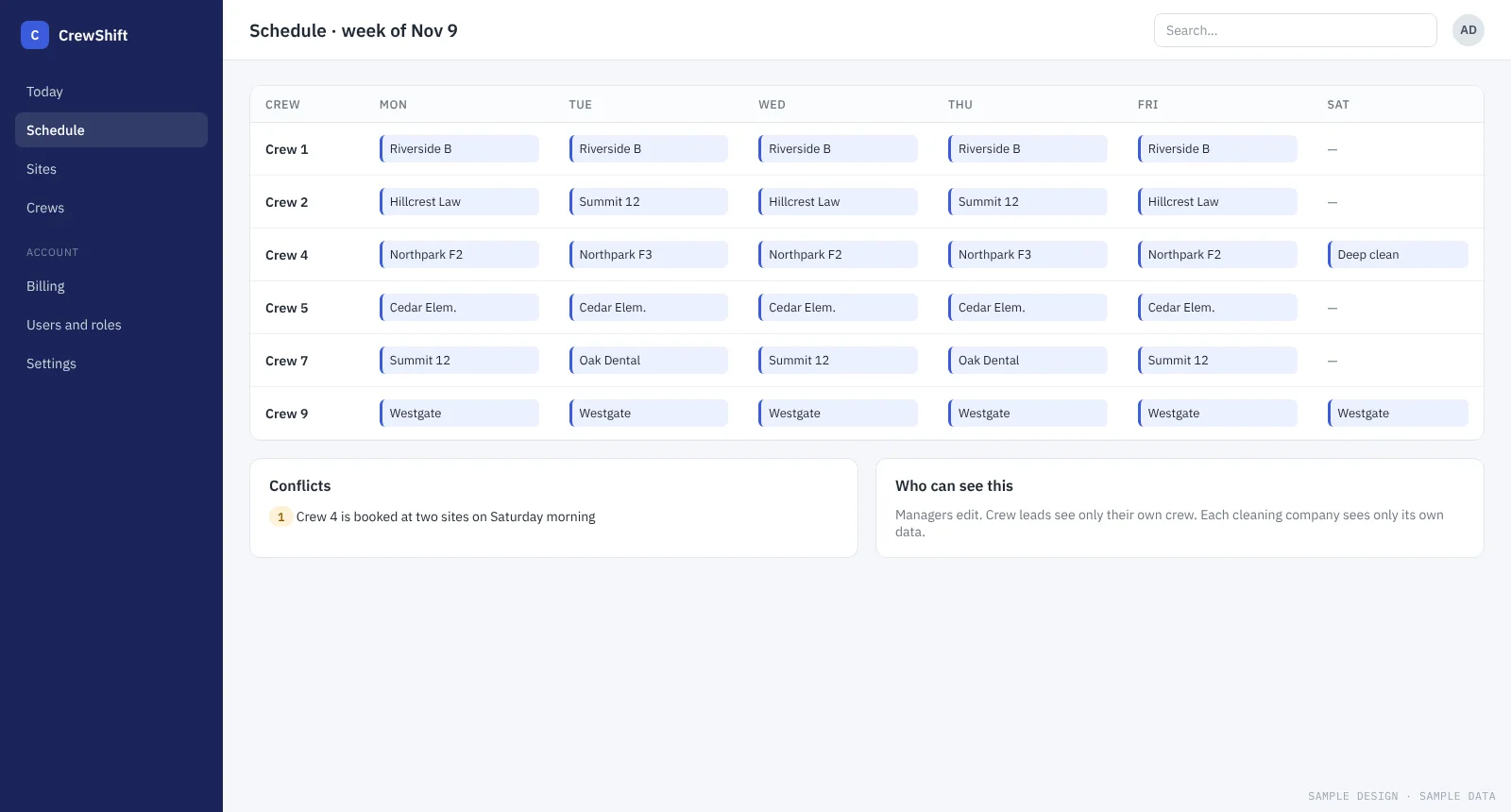
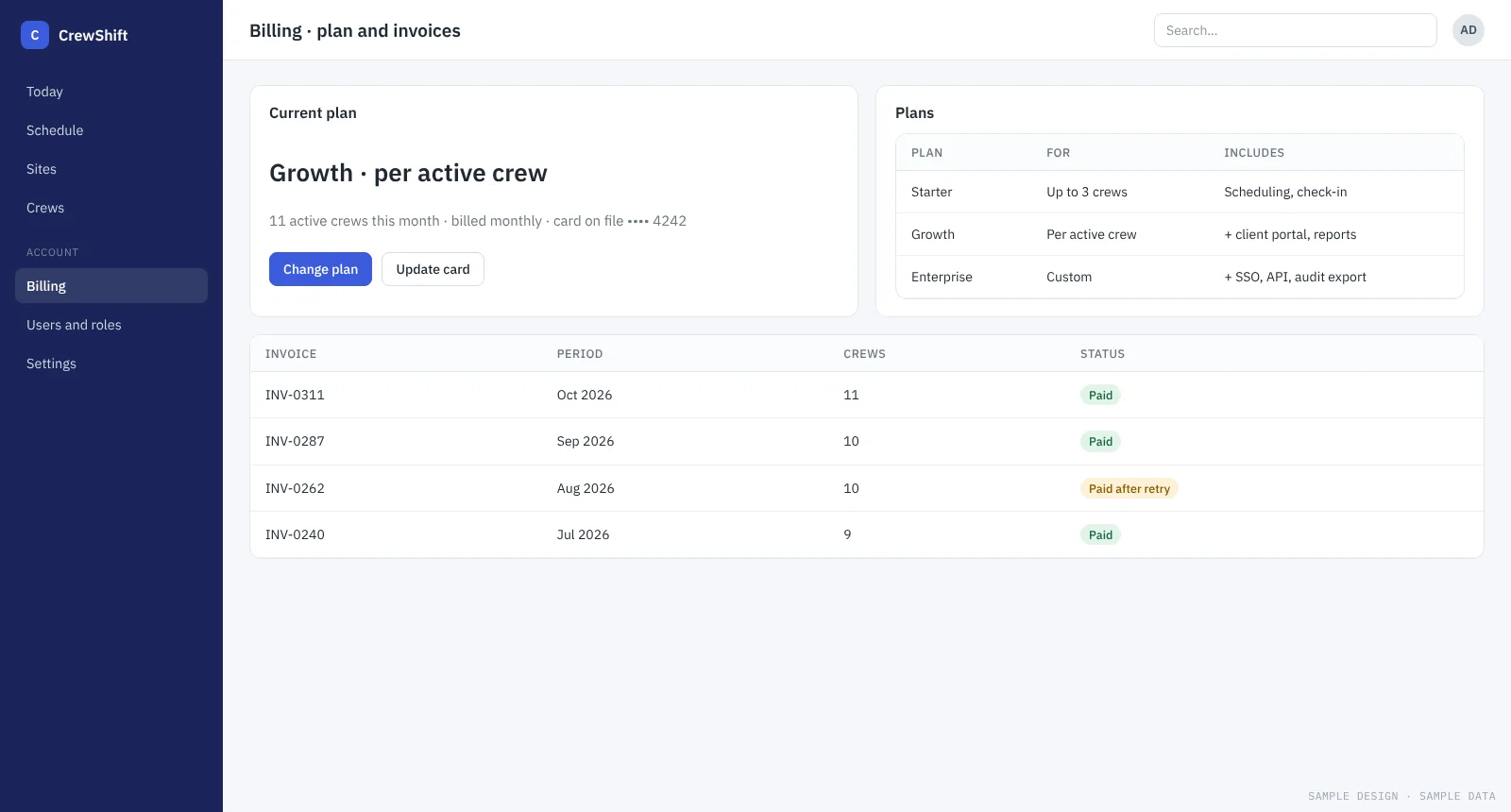
A scheduling SaaS for commercial cleaning companies, built for its first 50 customers
A founder with a cleaning business wants to sell the scheduling system she built for herself to other cleaning companies. That means turning a single-company tool into a product: separate tenants, roles, onboarding and billing that charges per active crew.
- Customers
- Cleaning companies (tenants)
- Users
- Owners, managers, crew leads
- Billing
- Per active crew, monthly
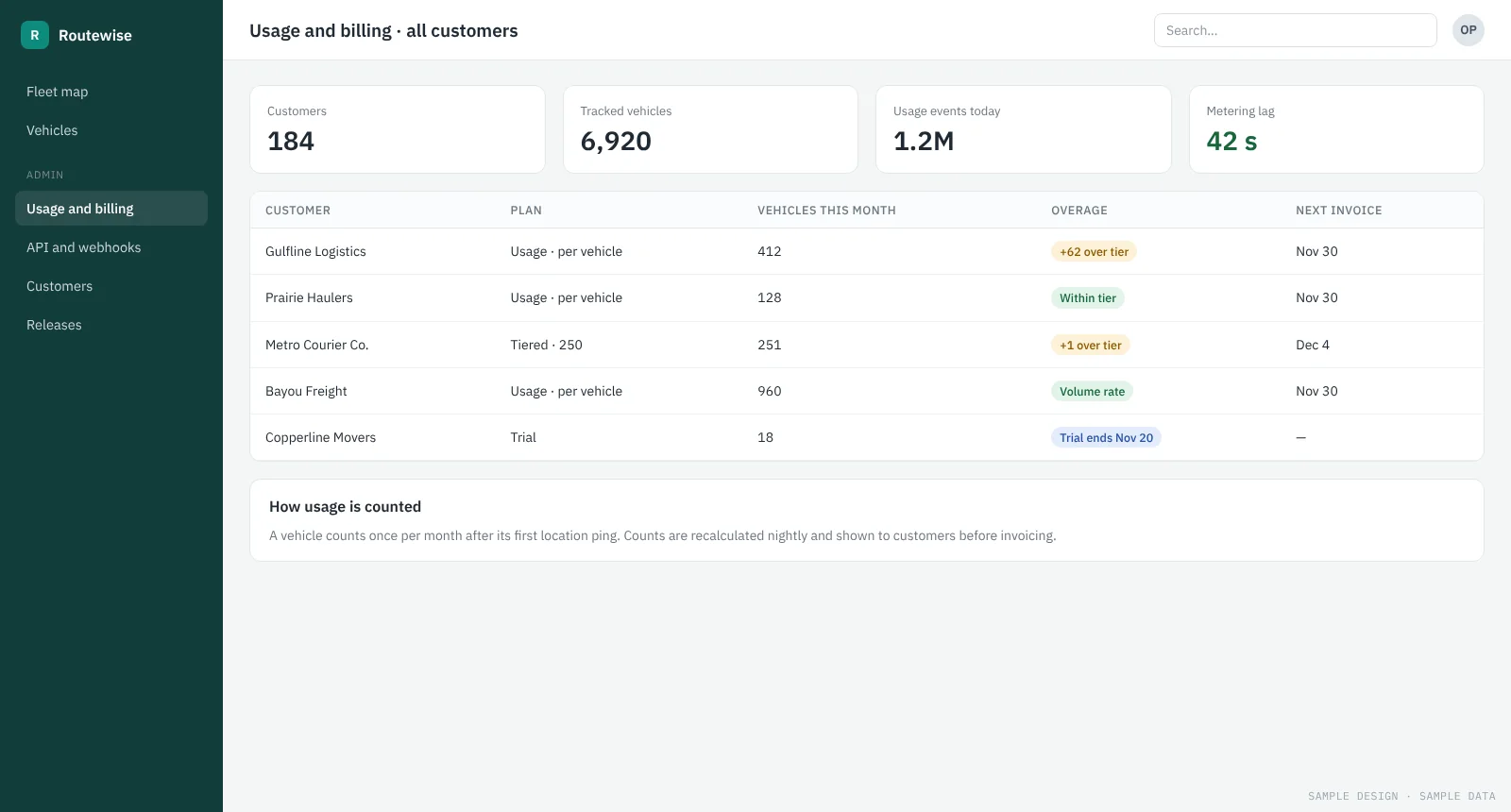
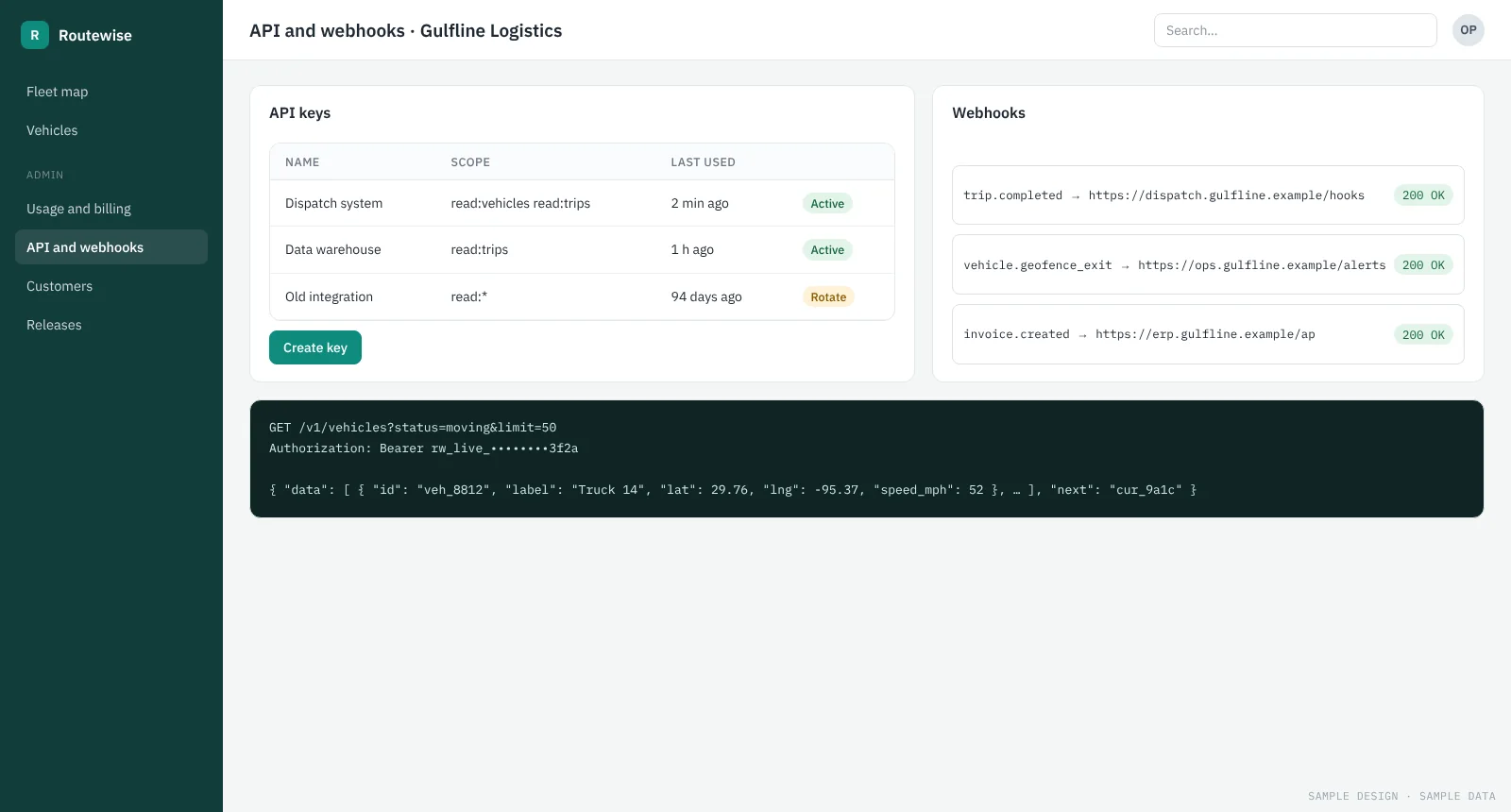
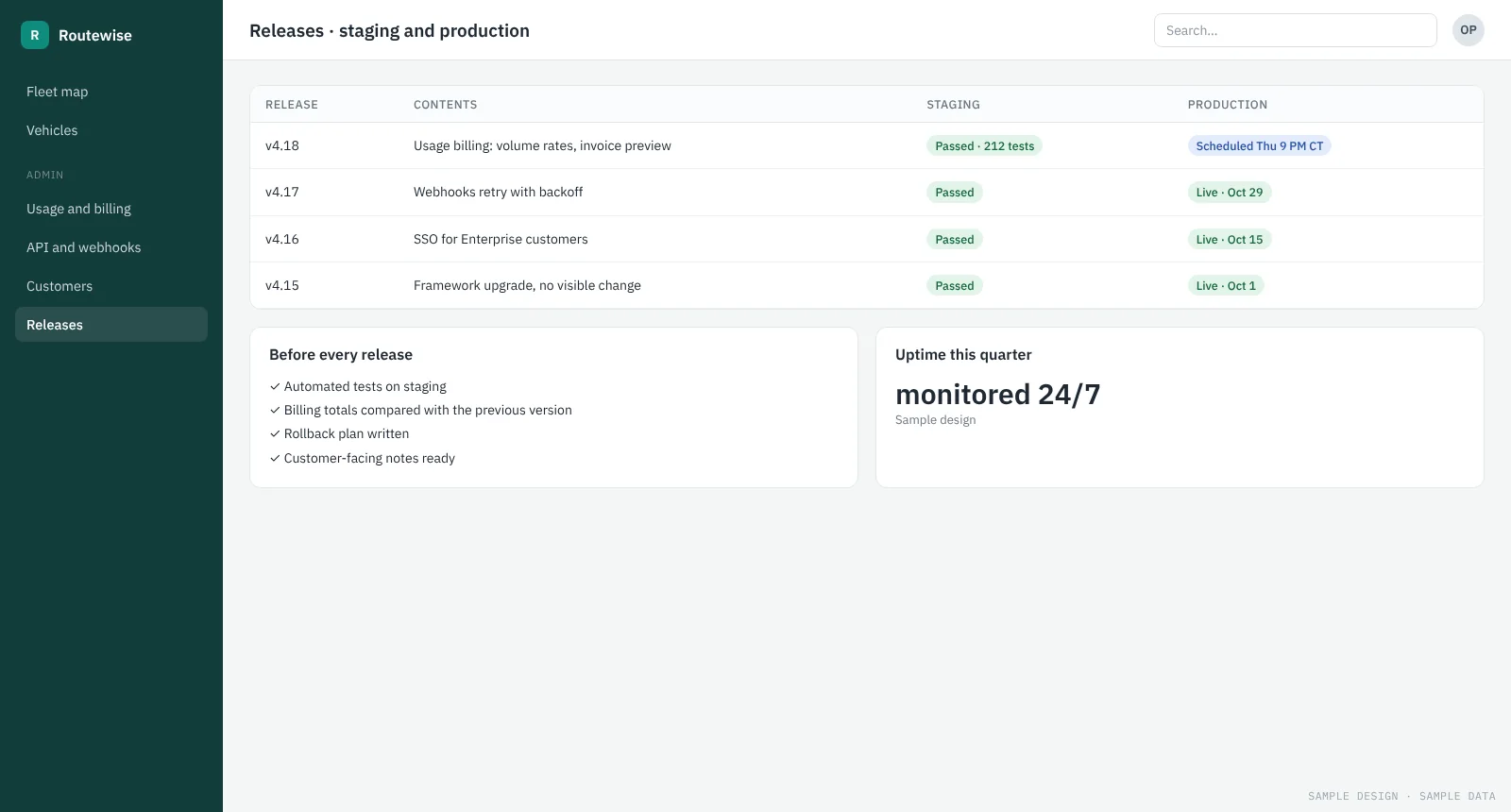
Usage billing, a public API and calmer releases for a growing fleet-tracking SaaS
An established SaaS that tracks delivery fleets has outgrown flat per-account pricing, and its larger customers keep asking for an API. Its small in-house team needs extra engineers who can work in the existing codebase without slowing releases.
Read the case studyHow we work
Dedicated engineers in your repo
They join your Git, issue tracker and chat, and follow your conventions.
Two-week releases
A planned set of changes, demoed at the end of each cycle.
Staging before production
Every change is checked in a staging environment before customers see it.
Documentation as we go
Architecture notes, runbooks and API docs kept current, not written at the end.
Map your SaaS build in two minutes
Pick your product type, user roles, billing model and integrations. Get a phased SaaS roadmap with components, risks and an effort range for each phase.
Open the roadmap toolWorking with SaaS companies across the US
Engineers work remotely in your tools, calls happen in your time zone, and we come to you for planning workshops. Your project lead is based in our Dallas office.
SaaS development questions
Which tech stack do you recommend for a SaaS product?
The one your team can hire for and maintain. We work in .NET, Java and Spring Boot, Angular, React and Next.js, with Flutter for mobile and AWS for hosting. If you already have a stack, we usually keep it.
Can you work with our existing code?
Yes. Most of our SaaS work is on existing products. We start by reading the code, running it and agreeing which parts to leave alone.
How do you handle multi-tenant data?
We agree the isolation model with you early: shared tables with a tenant key, separate schemas or separate databases, based on your customers’ requirements and your budget. Whatever the model, every query and API call is checked for tenant boundaries.
Who owns the code and the cloud accounts?
You do. Repositories, cloud accounts, domains and third-party services stay in your company’s name.
Can you add AI features to our product?
Yes. We add features such as document reading, summaries or an in-app assistant behind a feature flag, measure the AI cost per action, and keep a person approving anything important.
Do you work with SaaS companies outside Texas?
Yes, anywhere in the US. Work is remote with calls in your time zone, and we visit for planning sessions when it helps.
Let’s talk about your product
Book a technical call, or map your build first with the free roadmap tool.